

Keynote at Mount Sinai Health System’s Medication Safety Together Summit
November 24, 2025
By ejfadmin
I was truly honored to represent the Emily Jerry Foundation last week at Mount Sinai Health System, where I had the privilege of delivering the keynote address to kick off their Medication Safety Together – An Interdisciplinary Summit… Read More


Arizona Scorecard
Grading Scale:
A – 85-100%, B – 70-84.9%, C – 55-69.9%, D – 40-54.9%, F – 0-39.9%
Grading Categories & Criteria
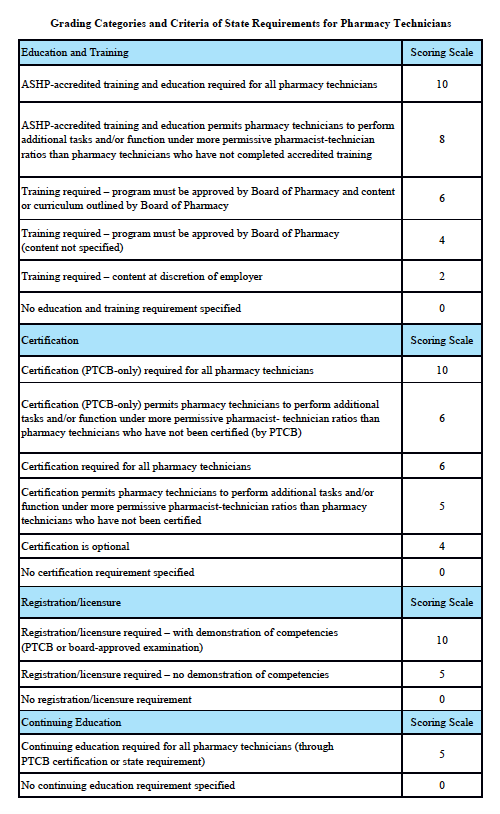
Arizona Law
I. Laws
Arizona Revised Statutes Chapter 18 Title 32
https://www.azleg.gov/arsDetail/?title=32
32-1923.01. Pharmacy technicians; pharmacy technician trainees; qualifications; remote dispensing site pharmacies
A. An applicant for licensure as a pharmacy technician must:
1. Be of good moral character.
1. Be at least eighteen years of age.
2. Have a high school diploma or the equivalent of a high school diploma.
3. Complete a training program prescribed by board rules.
4. Pass a board-approved pharmacy technician examination.
B. An applicant to register as a pharmacy technician trainee must:
1. Be of good moral character.
1. Be at least eighteen years of age.
2. Register with the board via an online application.
C. Before a pharmacy technician prepares, compounds or dispenses prescription medications at a remote dispensing site pharmacy, the pharmacy technician shall:
1. Complete, in addition to any other board-approved mandatory continuing professional education requirements, a two-hour continuing education program on remote dispensing site pharmacy practices provided by an approved provider.
2. Have at least one thousand hours of experience working as a pharmacy technician in an outpatient pharmacy setting under the direct supervision of a pharmacist.
D. A pharmacy technician working at a remote dispensing site pharmacy:
1. Shall maintain an active, nationally recognized pharmacy technician certification approved by the board.
2. May not perform extemporaneous sterile or nonsterile compounding but may prepare commercially available medications for dispensing, including the reconstitution of orally administered powder antibiotics.” “32-1925. Renewal of license of pharmacists, interns and pharmacy technicians; fees; expiration dates; penalty for failure to renew; continuing education
A. Except for interns and pharmacy technician trainees, the board shall assign all persons who are licensed under this chapter to one of two license renewal groups. Except as provided in section 32-4301, a holder of a license certificate designated in the licensing database as even by way of verbiage or numerical value shall renew it biennially on or before November 1 of the even-numbered year, two years after the last renewal date. Except as provided in section 32-4301, a holder of a license certificate designated in the licensing database as odd by way of verbiage or numerical value shall renew it biennially on or before November 1 of the odd-numbered year, two years after the last renewal date. Failure to renew and pay all required fees on or before November 1 of the year in which the renewal is due suspends the license. The board shall vacate a suspension when the licensee pays all past due fees and reinstatement penalties. Reinstatement penalties shall not exceed $350. The board may waive collection of a fee or reinstatement penalty due after suspension under conditions established by a majority of the board.
B. The board shall prorate the fee for a new license for the remaining full calendar months of the respective group to which the licensee is assigned.
B. A person shall not apply for license renewal more than sixty days before the expiration date of the license.
C. A person who is licensed as a pharmacist or a pharmacy technician and who has not renewed the license for five consecutive years shall furnish to the board satisfactory proof of fitness to be licensed as a pharmacist or a pharmacy technician. A person whose license has lapsed for two or more renewal cycles shall pay the fees for the two most recent renewal cycles and the penalties before being reinstated.
D. Biennial renewal fees for licensure shall be not more than:
1. For a pharmacist, $250.
2. For a pharmacy technician, $100.
3. For a duplicate renewal license, $25.
E. Fees that are designated to be not more than a maximum amount shall be set by the board for the following two fiscal years beginning November 1. The board shall establish fees approximately proportionate to the maximum fee allowed to cover the board’s anticipated expenditures for the following two fiscal years. Variation in a fee is not effective except at the expiration date of a license.
F. The board shall not renew a license for a pharmacist unless the pharmacist has complied with the mandatory continuing professional pharmacy education requirements of sections 32-1936 and 32-1937.
G. The board shall prescribe intern licensure renewal fees that do not exceed $75. The license of an intern who does not receive specific board approval to renew the intern license or who receives board approval to renew but who does not renew and pay all required fees before the license expiration date is suspended after the license expiration date. The board shall vacate a suspension if the licensee pays all past due fees and penalties. Penalties shall not exceed $350. The board may waive collection of a fee or penalty due after suspension under conditions established by the board.
H. The board shall not renew a license for a pharmacy technician unless that person has a current board-approved license and has complied with board-approved mandatory continuing professional education requirements. If a pharmacy technician prepares, compounds or dispenses prescription medications at a remote dispensing site pharmacy, the pharmacy technician shall complete, in addition to any other board-approved mandatory continuing professional education requirements, a two-hour continuing education program on remote dispensing site pharmacy practices provided by an approved provider.”
“Arizona Administrative Code Title 4 Chapter 23
https://apps.azsos.gov/public_services/Title_04/4-23.pdf
R4-23-653. Personnel: Professional or Technician
No Change. Consider deleting paragraphs A through E.
A. Each hospital pharmacy shall be directed by a pharmacist who is licensed to engage in the practice of pharmacy in Arizona and is referred to as the Director of Pharmacy. The Director of Pharmacy shall be the pharmacist-in-charge, as defined in A.R.S. § 32-1901 or shall appoint a pharmacist-in-charge. The Director of Pharmacy and the pharmacist-in-charge, if a different individual, shall:
1. Be responsible for all the activities of the hospital pharmacy and for meeting the requirements of the Arizona Pharmacy Act and these rules;
2. Ensure that the policies and procedures required by these rules are prepared, implemented, and complied with;
3. Review biennially and, if necessary, revise the policies and procedures required under these rules;
4. Document the review required under subsection (A)(3);
5. Assemble the policies and procedures as a written manual or by another method approved by the Board or its designee; and
6. Make the policies and procedures available within the pharmacy for employee reference and inspection by the Board or its designee.
B. In all hospitals, a pharmacist shall be in the hospital during the
time the pharmacy is open for pharmacy services, except for an extreme emergency as defined in R4-23-110. Pharmacy services shall be provided for a minimum of 40 hours per week, unless an exception for less than the minimum hours is made upon written request by the hospital and with express permission of the Board or its designee.
C. In a hospital where the pharmacy is not open 24 hours per day
for pharmacy services, a pharmacist shall be “on-call” as defined in R4-23-651 when the pharmacy is closed.
D. The Director of Pharmacy may be assisted by other personnel
approved by the Director of Pharmacy in order to operate the pharmacy competently, safely, and adequately to meet the needs of the hospital’s patients.
E. Pharmacists. A pharmacist or a pharmacy intern or graduate intern under the supervision of a pharmacist shall perform the following professional practices:
1. Verify a patient’s medication order before administration of a drug to the patient, except:
a. In an emergency medical situation; or
b. In a hospital where the pharmacy is open less than 24 hours a day for pharmacy services, a pharmacist shall verify a patient’s medication order within four hours of the time the pharmacy opens for pharmacy services;
2. Verify a medication order’s pharmaceutical and therapeutic feasibility based upon:
a. The patient’s medical condition,
b. The patient’s allergies,
c. The pharmaceutical and therapeutic incompatibilities, and
d. The recommended dosage limits;
3. Measure, count, pour, or otherwise prepare and package a drug needed for dispensing, except a pharmacy technician or pharmacy technician trainee may measure, count, pour, or otherwise prepare and package a drug needed for dispensing under the supervision of a pharmacist accord-ing to written policies and procedures approved by the Board or its designee;
4. Compound, admix, combine, or otherwise prepare and package a drug needed for dispensing, except a pharmacy technician may compound, admix, combine, or otherwise prepare and package a drug needed for dispensing under the supervision of a pharmacist according to written policies and procedures approved by the Board or its designee;
5. Verify the accuracy, correct procedure, compounding, admixing, combining, measuring, counting, pouring, preparing, packaging, and safety of a drug prepared and packaged by a pharmacy technician or pharmacy technician trainee according to subsections (E)(3) and (4) and according to the policies and procedures in subsection (G);
6. Supervise drug repackaging and check the completed repackaged product as specified in R4-23-402(A);
7. Supervise training and education in aseptic technique and drug incompatibilities for all personnel involved in the admixture of parenteral products within the hospital pharmacy;
8. Consult with the medical practitioner regarding the patient’s drug therapy or medical condition;
9. When requested by a medical practitioner, patient, patient’s agent, or when the pharmacist deems it necessary, provide consultation with a patient regarding the medication order, patient’s profile, or overall drug therapy;
10. Monitor a patient’s drug therapy for safety and effectiveness;
11. Provide drug information to patients and health care professionals;
12. Manage the activities of pharmacy technicians, pharmacy technician trainees, other personnel, and systems to ensure that all activities are performed accurately, safely, and without risk of harm to patients;
13. Verify the accuracy of all aspects of the original, completed medication order; and
14. Ensure compliance by pharmacy personnel with a quality assurance program developed by the hospital.
F. Pharmacy technicians and pharmacy technician trainees. Before working as a pharmacy technician or pharmacy technician trainee, an individual shall meet the eligibility and licensure requirements prescribed in 4 A.A.C. 23, Article 11
G. Pharmacy technician policies and procedures. Before employing a pharmacy technician or pharmacy technician trainee, a Director of Pharmacy or pharmacist-in-charge shall develop the policies and procedures required under R4-23-1104.
H. Pharmacy technician training program.
1. A Director of Pharmacy or pharmacist-in-charge shall comply with the training program requirements of R4-23-1105 based on the needs of the hospital pharmacy;
2. A pharmacy technician or pharmacy technician trainee shall:
a. Perform only those tasks for which training and competency have been demonstrated; and
b. Not perform professional practices reserved for a pharmacist, graduate intern, or pharmacy intern in subsection (E), except as specified in subsections (E)(3) and (4).
I. Supervision. A hospital pharmacy’s Director of Pharmacy and
the pharmacist-in-charge, if a different individual, shall supervise all of the activities and operations of a hospital pharmacy. A pharmacist shall supervise all functions and activities of pharmacy technicians, pharmacy technician trainees, and other hospital pharmacy personnel to ensure that all functions and activities are performed competently, safely, and without risk of harm to patients.
Historical Note
Former Rules 6.7310 and 6.7320; Amended effective August 10, 1978 (Supp. 78-4). Section repealed, new Section adopted effective February 7, 1990 (Supp. 90-1). Amended effective November 1, 1993 (Supp. 93-4). Amended by final rulemaking at 8 A.A.R. 4902, effective
January 5, 2003 (Supp. 02-4). Amended by final rulemaking at 10 A.A.R. 1192, effective May 1, 2004 (Supp. 04-1). Amended by final rulemaking at 12 A.A.R. 3032, effective October 1, 2006 (Supp. 06-3).” “R4-23-1101. Repealed (contents moved to 1102)
Historical Note
New Section made by final rulemaking at 10 A.A.R.
1192, effective May 1, 2004 (Supp. 04-1). Amended by
final rulemaking at 19 A.A.R. 102, effective March 10,
2013 (Supp. 13-1). Repealed by final rulemaking at 30
A.A.R. 3095 (October 25, 2024), effective November 30,
2024 (Supp. 24-4).” “R4-23-1102. Pharmacy Technician Licensure
A. License required. A person shall not work as a pharmacy technician in Arizona unless the person possesses a license issued by the Board. A licensed pharmacy technician shall maintain the certificate of licensure, which is in good standing, at the practice site for inspection by the Board or its designee or review by the public. A license issued by the Board is not transferable.
B. Eligibility. An applicant for licensure as a pharmacy technician, as defined at A.R.S. § 32-1901, shall provide the Board proof the applicant is eligible under A.R.S. § 32-1923.01(A), including documentation the applicant:
1. Passed a Board-approved pharmacy technician examination;
2. Passed the Foreign Pharmacy Graduate Equivalency Examination, if applicable; or
3. Graduated from a Board-approved pharmacy school.
C. Application.
1. An applicant for licensure as a pharmacy technician shall:
a. Submit a completed application electronically or manually on a form furnished by the Board, and
b. Submit with the application form:
i. The documents specified in the application form,
ii. The initial licensure fee specified in R4-23-205, and
iii. The wall license fee specified in R4-23-205.
2. The Board office shall deem an application form received on the date the Board office electronically or manually date-stamps the form.
D. Licensure.
1. If an applicant is found to be ineligible for pharmacy technician licensure under statute and rule, the Board office shall issue a written notice of denial to the applicant.
2. If an applicant is found to be eligible for pharmacy technician licensure under statute and rule, the Board office shall issue a certificate of licensure and a wall license. An applicant who is assigned a license number and granted “open” or “active” status on the Board’s license verification site may begin practice as a pharmacy technician. An applicant shall not practice as a pharmacy technician if the Board’s license verification site indicates any status other than “open” or “active.”
E. License renewal.
1. To renew a license, a pharmacy technician shall submit a completed license renewal application electronically or manually on a form furnished by the Board with the biennial renewal fee specified in R4-23-205.
2. If the biennial renewal fee is not paid by November 1 of the renewal year specified in A.R.S. § 32-1925, the pharmacy technician license is suspended and the licensee shall not practice as a pharmacy technician. The licensee shall pay a reinstatement penalty as provided in A.R.S. § 32-1925 and R4-23-205 to vacate the suspension.
3. Continuing education requirement. Under A.R.S. § 32-
1925(H), continuing professional education is mandatory
for a licensee.
a. The Board shall accept continuing education hours awarded only by an approved provider.
b. The Board shall not renew a pharmacy technician license unless the licensee successfully completes 20 continuing education hours during the two years since the licensee’s last renewal date and attests to that on the biennial renewal form.
c. Special continuing education requirements. If applicable, during each two-year license period, a pharmacy technician:
i. Shall not administer a vaccine under R4-23- 1104(B)(5) unless the pharmacy technician has successfully completed two continuing education hours relating to administration of vaccines; and
ii. As described under A.R.S. § 32-1925(H), shall successfully complete two continuing education hours regarding remote dispensing site pharmacy practices.
d. A pharmacy technician licensee is exempt from the continuing education requirement in subsection (E)(3)(b) between the time of initial licensure and first renewal.
e. A pharmacy technician licensee shall maintain for five years continuing education records that indicate the number of hours successfully completed and the approved provider of each continuing education. The pharmacy technician licensee shall make the records available to the Board on request.
f. The Board shall deem failure to comply with the continuing education requirements as unprofessional conduct and grounds for disciplinary action under A.R.S. § 32-1927.01.
g. A pharmacy technician who is aggrieved by a Board decision concerning continuing education may request a hearing before the Board.
F. Delinquent license for five or more consecutive years. The Board shall reinstate a delinquent Arizona pharmacy technician license only if the individual furnishes satisfactory proof of fitness to be licensed as a pharmacy technician and pays all fees for the two most recent renewal periods and penalty fees. Satisfactory proof includes:
1. For an individual who is practicing as a pharmacy technician out-of-state with a pharmacy technician license issued by another jurisdiction:
a. Proof of current, unrestricted pharmacy technician licensure in another jurisdiction; and
b. Proof of employment as a pharmacy technician during the last 12 months; or
2. For an individual who did not practice as a pharmacy technician within the last 12 months:
a. Take and pass a Board-approved pharmacy technician examination, and
b. Complete 20 continuing education hours.
G. Time frames for pharmacy technician licensure and license renewal. The Board office shall follow the time frames established in R4-23-202(F).
H. Verification of license. A pharmacy permittee or pharmacistin-charge shall not allow a person to practice as a pharmacy technician until the pharmacy permittee or pharmacist-incharge verifies the person is currently licensed by the Board as a pharmacy technician.
Historical Note
New Section made by final rulemaking at 10 A.A.R. 1192, effective May 1, 2004 (Supp. 04-1). Amended by final rulemaking at 19 A.A.R. 102, effective March 10, 2013 (Supp. 13-1). Amended by final rulemaking at 19 A.A.R. 2911, effective November 10, 2013 (Supp. 13-3). Amended by final rulemaking at 25 A.A.R. 1015, effective June 1, 2019 (Supp. 19-2). Amended by final rulemaking at 30 A.A.R. 3095 (October 25, 2024), effective November 30, 2024 (Supp. 24-4).” “R4-23-1103. Pharmacy Technician Trainee Licensure is now:
R4-23-1103. Pharmacy Technician Trainee Registration
A. Registration required. As indicated under A.R.S. § 32- 1923.01, a person shall not work as a pharmacy technician trainee in Arizona unless the person has registered with the Board. A registered pharmacy technician trainee shall maintain the registration certificate at the practice site for inspection by the Board or its designee or review by the public.
Registration as a pharmacy technician trainee is not transferable.
B. Eligibility. An applicant for a 36-month, non-renewable registration as a pharmacy technician trainee shall provide the Board proof the applicant is eligible under A.R.S. § 32- 1923.01(B).
C. Application.
1. An applicant for a 36-month, non-renewable registration as a pharmacy technician trainee shall:
a. Submit a completed application electronically on a form available on the Board’s website, and
b. Submit with the application form:
i. The documents specified in the application form, and
ii. The registration fee specified in R4-23-205.
2. The Board office shall deem an application form received on the date the Board office electronically date-stamps the form.
D. Registration.
1. If an applicant is found to be ineligible for registration as a pharmacy technician trainee under statute and rule, the Board office shall issue a written notice of denial to the applicant.
2. If an applicant is found to be eligible for registration as a pharmacy technician trainee under statute and rule, the Board office shall issue a certificate of registration. An applicant who is assigned a registration number and granted “open” or “active” status on the Board’s website may begin practice as a pharmacy technician trainee. An applicant shall not practice as a pharmacy technician trainee if the Board’s website indicates any status other than “open” or “active.”
E. Time frames for pharmacy technician trainee registration. The Board office shall follow the time frames established in R4-23-202(F).
F. Verification of registration. A pharmacy permittee or pharmacist-in-charge shall not allow a person to practice as a pharmacy technician trainee until the pharmacy permittee or pharmacist-in-charge verifies that the person is currently registered by the Board as a pharmacy technician trainee.
Historical Note
New Section made by final rulemaking at 10 A.A.R. 1192, effective May 1, 2004 (Supp. 04-1). Amended by final rulemaking at 19 A.A.R. 2911, effective November 10, 2013 (Supp. 13-3). Amended by final rulemaking at 25 A.A.R. 1015, effective June 1, 2019 (Supp. 19-2).
Amended by final rulemaking at 26 A.A.R. 223, effective March 14, 2020 (Supp. 20-1). Amended by final rulemaking at 30 A.A.R. 3095 (October 25, 2024), effective November 30, 2024 (Supp. 24-4)” “Add:
R4-23-1104. Pharmacy Technicians and Pharmacy Technician
Trainees
A. Permissible tasks of a pharmacy technician trainee. Acting in
compliance with all applicable statutes and rules and under the
supervision of a pharmacist, a pharmacy technician trainee registered under R4-23-1103 may assist an intern or pharmacist with the following when applicable to the pharmacy practice site:
1. Record on the original prescription order the serial number of the prescription medication and date dispensed;
2. Initiate or accept verbal or electronic refill authorization from a medical practitioner or medical practitioner’s agent and record, on the original prescription order or by an alternative method approved by the Board or its designee, the medical practitioner’s name, patient name, name and quantity of prescription medication, specific refill
information, and name of medical practitioner’s agent, if any;
3. Record information in the refill record or patient profile;
4. Enter information for a new or refill prescription medication as required under A.R.S. § 32-1964;
5. Type and affix a label for the prescription medication. A pharmacist or intern working under the supervision of a pharmacist shall verify the accuracy of the label as described under R4-23-402(A)(11);
6. Reconstitute a prescription medication, if a pharmacist checks the ingredients and procedure before reconstitution and verifies the final product after reconstitution;
7. Retrieve, count, or pour a prescription medication, if a pharmacist verifies the contents of the prescription medication against the original prescription medication container or by an alternative drug identification method approved by the Board or its designee;
8. Prepackage drugs in accordance with R4-23-402(A); and
9. Measure, count, pour, or otherwise prepare and package a drug needed for hospital inpatient dispensing, if a pharmacist verifies the accuracy, measuring, counting, pouring, preparing, packaging, and safety of the drug before the drug is delivered to a patient care area.
B. Permissible tasks of a pharmacy technician. Acting in compliance with all applicable statutes and rules and under the supervision of a pharmacist, a pharmacy technician licensed under R4-23-1102 may:
1. Perform the tasks listed in subsection (A);
2. After completing a pharmacy technician drug compounding training program developed by the pharmacy permittee or pharmacist-in-charge under R4-23-1105(C), assist a pharmacist or intern in compounding prescription medi-cations and sterile or non-sterile pharmaceuticals in accordance with written policies and procedures, if the preparation, accuracy, and safety of the final product is verified by a pharmacist before dispensing;
3. Administer a vaccine when:
a. Administration of the vaccine is done under an order that complies with A.R.S. § 32-1974 and R4-23-411;
b. Administration of the vaccine is delegated by and done under the supervision of a pharmacist on duty who is certified under A.R.S. § 32-1974 to administer vaccines; and
c. There is documentation by the permittee that the pharmacy technician has completed the following:
i. A practical training program that is approved by the Accreditation Council for Pharmacy Education and includes hands-on injection
technique and recognition and treatment of emergency reactions to vaccines; and
ii. Current certification in basic cardiopulmonary resuscitation.
4. Perform a task not related to professional judgment if the
task is delegated to the pharmacy technician by the pharmacist on duty after the pharmacist on duty ensures the pharmacy technician is trained to do the task and there is documentation by the permittee of the training; and
5. A pharmacist on duty shall not delegate or attempt to delegate the following tasks to a pharmacy technician:
a. Administering an emergency medication,
b. Counseling a patient,
c. Conducting a drug utilization review,
d. Performing any task that requires the exercise of clinical judgment,
e. Issuing a prescription order,
f. Receiving a new prescription order for a controlled substance, or
g. Transferring by telephone an existing prescription order for a controlled substance.
C. Prohibited activities. A pharmacy technician or pharmacy technician trainee shall not perform a professional practice
reserved for a pharmacist or intern in accordance with R4-23-402 or R4-23-653 unless otherwise allowed by rule.
D. A pharmacy technician or pharmacy technician trainee shall wear a badge indicating name and title while on duty.
E. Before employing a pharmacy technician or pharmacy technician trainee, a pharmacy permittee or pharmacist-in-charge shall develop, implement, review, revise, and enforce, in the manner described in R4-23-653(A), policies and procedures addressing tasks to be performed by the pharmacy technician or pharmacy technician trainee that are consistent with state and federal law and the site at which the pharmacy technician or pharmacy technician trainee will be employed.
Historical Note
New Section made by final rulemaking at 10 A.A.R. 1192, effective May 1, 2004 (Supp. 04-1). Amended by final rulemaking at 12 A.A.R. 3032, effective October 1, 2006 (Supp. 06-3). Amended by final rulemaking at 19 A.A.R. 102, effective March 10, 2013 (Supp. 13-1).
Amended by final rulemaking at 23 A.A.R. 3257, effective January 8, 2018 (Supp. 17-4). Amended by final rulemaking at 28 A.A.R. 994 (May 13, 2022), effective July 2, 2022 (Supp. 22-2). Section made by emergency rulemaking at 29 A.A.R. 1196 (May 26, 2023), with an
immediate effective date of May 4, 2023; effective for 180 days (Supp. 23-2). Amended by final rulemaking at 29 A.A.R. 2191 (September 22, 2023), with an immediate effective date of September 6, 2023 (Supp. 23- 3). Amended by final rulemaking at 30 A.A.R. 3095 (October 25, 2024), effective November 30, 2024 (Supp.
24-4).” “R4-23-1105. Pharmacy Technician Trainee Training Program; Pharmacy Technician Drug Compounding Training Program
A. Nothing in this Section prevents additional offsite training of a
pharmacy technician.
B. Pharmacy technician trainee training program. A pharmacy
permittee or pharmacist-in-charge shall develop, implement, review, revise, and enforce, in the manner described in R4-23- 653(A), a pharmacy technician trainee training program that is based on the needs of the individual pharmacy and designed to prepare the pharmacy technician trainee to pass a Boardapproved national certification examination.
C. Pharmacy technician drug compounding training program.
1. A pharmacy permittee or pharmacist-in-charge shall develop, implement, review, revise, and enforce, in the manner described in R4-23-653(A), a pharmacy technician drug compounding training program based on the needs of the individual pharmacy.
2. A pharmacist-in-charge shall:
a. Document the date a pharmacy technician successfully completed the pharmacy technician drug compounding training program, and
b. Maintain the required documentation for inspection by the Board or its designee.
D. A pharmacy technician shall perform only those tasks, listed in
R4-23-1104(B), for which training and competency has been demonstrated.
E. If a pharmacy technician trainee leaves a training program described under subsection (B) before successfully completing
the training program, the pharmacist-in-charge shall provide the pharmacy technician trainee with written documentation of the hours of training completed and the tasks for which competence was demonstrated.
Historical Note
New Section made by final rulemaking at 10 A.A.R. 1192, effective May 1, 2004 (Supp. 04-1). Amended by final rulemaking at 12 A.A.R. 3032, effective October 1, 2006 (Supp. 06-3). Amended by final rulemaking at 19 A.A.R. 102, effective March 10, 2013 (Supp. 13-1).
Amended by final rulemaking at 25 A.A.R. 1015, effective June 1, 2019 (Supp. 19-2). Amended by final rulemaking at 30 A.A.R. 3095 (October 25, 2024), effective November 30, 2024 (Supp. 24-4).” R4-23-1106. Continuing Education Requirements is repealed and consolidated into R4-23-1102.
III. References
Arizona Revised Statutes Chapter 18 Title 32
http://www.azpharmacy.gov/pdfs/Chapter%2018.pdf
Arizona Administrative Code Chapter 23
http://azsos.gov/public_services/Title_04/4-23.htm
The data contained in this 2012 Annual Scorecard are accurate as of December 2012 . Because statutes and regulations are continually revised, the data are subject to change. These data have been verified with the state board of pharmacy. This scorecard is updated on an annual basis in order to incorporate statutory and regulatory changes. A new scorecard will be issued in July 2013.
Scoring rationale for Education and Training:
In order to protect the public and help ensure patient safety, it is important that pharmacy technicians are properly educated and trained. The most rigorous training is accredited training. The sole entity empowered to accredit pharmacy-technician training programs is the American Society of Health-System Pharmacists (ASHP). Please note that this is “programmatic accreditation” – not “institutional accreditation.” It is the content of the training program – as measured against established standards – that is being evaluated and accredited. Accredited training is vital to protecting patient safety because it means that a pharmacy-technician training program has met established quality standards to provide assurance and confidence to the public. For more information, please see http://www.ashp.org/menu/Accreditation/TechnicianAccreditation.aspx.
Scoring rationale for Certification:
Certification is the process by which a nongovernmental agency or association grants recognition to an individual who has met certain predetermined qualifications specified by that agency or association. This is often determined by an examination process. Numerous organizations have recommended that the certification exam conducted by the Pharmacy Technician Certification Board (PTCB) should be recognized as the sole, nationally-accredited certification exam for pharmacy technician certification – including the National Association of Boards of Pharmacy (NABP), the Texas State Board of Pharmacy (TSBP), and the U.S. Department of Veterans Affairs (VA). In a recent report, NABP recommended that states be encouraged to “recognize certification by the Pharmacy Technician Certification Board (PTCB).” Moreover, NABP performed a psychometric audit of the PTCB’s pharmacy technician certification examination (PTCE) in 2001 and determined that the PTCE is psychometrically sound, defensible, and valid. In May 2010, the TSBP awarded the PTCB with the Pharmacy Technician Certification Provider contract in Texas. PTCB was selected for the contract after a rigorous bidding and evaluation process that included formal reviews and evaluations from three independent psychometricians. TSBP confidently recognizes PTCB as the single provider of certification examinations for pharmacy technicians. In addition, in June 2010, the VA began requiring PTCB certification for VA pharmacy technicians employed at grade GS-6 and above.
Scoring rationale for Registration/Licensure:
Registration/licensure is the process by which the state maintains a list of all pharmacy technicians in the state and grants permission for an individual to work as a pharmacy technician in the state based on the applicant’s completion of all pre-requisites to registration/licensure – such as required training and certification.
Scoring rationale for Continuing Education:
Continuing education enables pharmacy technicians to fulfill their professional responsibility to maintain competence and up-to-date knowledge and skills in an environment of technological advances and increasingly complex, new medications and therapies.
Our Mission
The Emily Jerry Foundation is determined to help make our nation’s, world renowned, medical facilities safer for everyone, beginning with our babies and children. We are accomplishing this very important objective by focusing on increasing public awareness of key patient safety related issues and identifying technology and best practices that are proven to minimize the “human error” component of medicine. Through our ongoing efforts The Emily Jerry Foundation is working hard to save lives every day.
Recent Posts
Archives