

Happy Heavenly 22nd Birthday Emily + Upcoming Pacific Coast Patient Safety Conference
February 24, 2026
By ejfadmin
Tomorrow, I’m really looking forward to heading to Monterey, California to speak on behalf of the Emily Jerry Foundation at the Pacific Coast Patient Safety Conference, hosted by the California Society of Health – System Pharmacists. But today… Read More


Massachusetts Scorecard
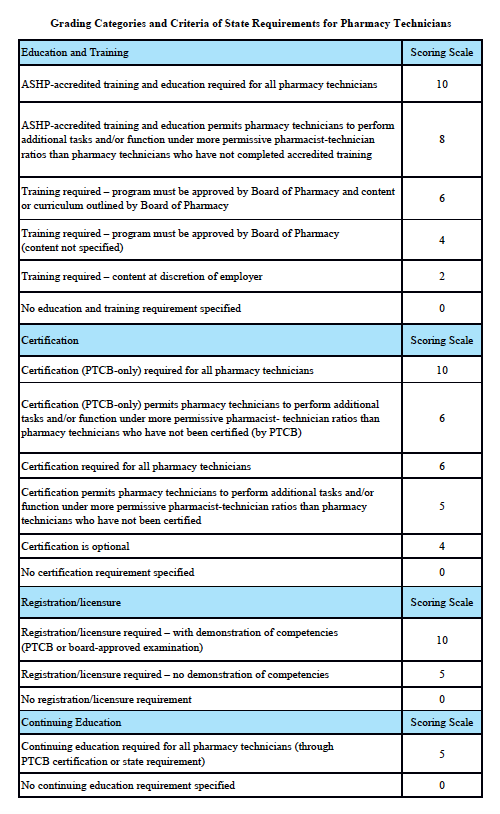
Grading Scale:
A – 85-100%, B – 70-84.9%, C – 55-69.9%, D – 40-54.9%, F – 0-39.9%
Grading Categories & Criteria
Massachusetts Law
I. Laws
https://malegislature.gov/Laws/GeneralLaws/PartI/TitleXVI/Chapter112/Section24C
Section 24C: Pharmacy technicians; registration
Section 24C. (a) A person who desires to become registered as a pharmacy technician shall, upon payment of a fee as determined annually by the commissioner of administration under the provision of section 3B of chapter 7, apply to the board of registration in pharmacy, herein and in sections 24 to 42A, inclusive, called the board, and be entitled to consideration by the board if such person meets the education, experience and examination requirements as established and adopted by the board.
(b) The board may adopt rules and regulations governing the practice of pharmacy technicians to promote the public health, safety and welfare including, but not limited to, adopting regulations establishing continuing education requirements for license renewal.
(c) The board may, without examination, register as a pharmacy technician any applicant who is duly licensed or registered under the laws of any state or territory of the United States, the District of Columbia or the commonwealth of Puerto Rico, where the requirements for licensure or registration are in the opinion of the board equivalent to those in the commonwealth.
(d) Each pharmacy technician shall register biennially and in the year designated by the board.
Code of Massachusetts Regulations Title 247
change link to https://www.mass.gov/regulations/247-CMR-800-pharmacy-interns-and-technicians” “8.02: Pharmacy Technicians
(1) No individual may serve as a pharmacy technician without holding a valid pharmacy technician license from the Board.
(2) An application for a pharmacy technician license shall be made on forms prescribed by, and available from, the Board. The application shall include:
(a) the applicant’s name;
(b) the applicant’s address;
(c) the applicant’s date of birth; and
(d) a recent passport-size photo revealing the applicant’s likeness.
(3) An applicant for a pharmacy technician license shall:
(a) be at least 18 years of age or older;
(b) be a high school graduate or the equivalent or currently enrolled in a program which awards such degree or certificate;
(c) be of good moral character;
(d) not have been convicted of a drug related felony or admitted to sufficient facts to warrant such findings; and
(e) satisfy one of the following requirements:
1. hold certification conferred by a board approved certifying body;
2. hold a license as a pharmacy technician in another state provided that the requirements for licensure in the original state are substantially equivalent to the requirements of the Board and the license is in good standing at the time of the application; or
3. achieve a Board-approved passing score on a Board-approved pharmacy technician assessment examination after having successfully completed one of the following:
a. a Board-approved pharmacytechnician training program, which training program shall include coverage of the topics of job descriptions, pharmacy security, commonly used medical abbreviations, routes of administration, product selection, final check by pharmacists, guidelines for the use of pharmacy technicians, and any other requirements of the Board; or
b. a minimum of 500 hours of employment as a pharmacy technician trainee. Documentation of completion of the required 500 hours of experience shall be attested to by the applicant under the pains and penalties of perjury and witnessed by the employer.
(4) A Board-approved training program may include:
(a) a pharmacy technician training program accredited by the American Society of Health System Pharmacists;
(b) a pharmacy technician training program provided by a branch of the United States Armed Services or Public Health Service;
(c) a Board-approved pharmacy technician training program which includes a minimum of 120 hours of theoretical and 120 hours of practical instruction;
(d) any other pharmacy technician training course approved by the Board.
(5) A Board-approved examination shall cover the following knowledge based areas:
(a) practice settings;
(b) duties and responsibilities of a pharmacy technician in relationship to other pharmacy personnel;
(c) laws and regulations regarding the practice of pharmacy and patient confidentiality;
(d) medical abbreviations and symbols;
(e) common dosage calculations; and
(f) identification of drugs, dosages, routes of administration, and storage requirements.
(6) Pharmacy Technician Duties and Responsibilities.
(a) A pharmacy technician shall wear a name tag which indicates the individual’s first name and the title “”Pharmacy Technician.””
(b) A pharmacy technician may relay to the patient or responsible person the pharmacist’s “”offer to counsel.”” as referenced in M.G.L. c. 94C, § 21A and 247 CMR 9.07(3): Patient Counseling.
(c) With the approval of the pharmacist on duty, a pharmacy technician may request and accept authorizations for refills from a prescriber or a prescriber’s agent provided that no information has changed from the previous prescription.
(d) A pharmacy technician may not administer medications or vaccines, perform drug utilization review, conduct clinical conflict resolution, contact prescribers concerning therapy clarification or therapymodification, provide patient counseling, or perform final dispensing process validation
8.03: Pharmacy Technician Trainees
(1) No individual may serve as a pharmacy technician trainee without holding a valid Pharmacy Technician Trainee License from the Board.
(2) A pharmacy technician trainee shall:
(a) be at least 16 years of age or older;
(b) be a high school graduate or the equivalent or currently enrolled in a program which awards such degree or certificate;
(c) be of good moral character; and
(d) not have been convicted of a drug related felony or admitted to sufficient facts to warrant such findings.
(3) An application for a pharmacy technician trainee License shall be made on forms prescribed by, and available from, the Board. The application shall include:
(a) the applicant’s name;
(b) the applicant’s address;
(c) the applicant’s date of birth; and
(d) a recent passport-size photo revealing the applicant’s likeness.
(4) Pharmacy Technician Trainee Duties and Responsibilities.
(a) A pharmacy technician trainee shall wear a name tag with the individual’s first name and the title “”Pharmacy Technician Trainee.””
(b) Except as set forth in 247 CMR 8.03(4)(c), a pharmacy technician trainee may be authorized to perform the duties of a pharmacy technician while acting under the direct supervision of a pharmacist.
(c) A pharmacy technician trainee may not take prescriptions over the telephone.
(5) Limitation on Period of Employment as a PharmacyTechnician Trainee. An individual may not work as a pharmacy technician trainee for more than 1500 hours or for more than one year, whichever period is shorter, unless:
(a) the Board grants an extension;
(b) the individual has not yet reached 18 years of age; or
(c) the individual has not yet completed at least 500 hours of employment as a pharmacy technician trainee.
An individual who has worked as a pharmacy technician trainee for more than 1500 hours or for more than one year prior to his or her 18th birthday shall submit an application for a pharmacy technician license within 30 days of his or her 18th birthday. ” “8.04: Certified Pharmacy Technicians
(1) No individual may work as a certified pharmacy technician without holding a valid pharmacy technician license from the Board.
(2) Certified pharmacy technician means a pharmacy technician that is certified by a Board-approved certifying body.
(3) In the event that a certified pharmacy technician’s certification lapses, that technician shall:
(a) be limited to performing the duties and responsibilities of a pharmacy technician, as set forth in 247 CMR 8.02;
(b) use the title “”pharmacy technician””; and
(c) be counted as a “”pharmacy technician”” in calculating supervisory ratios, as set forth in 247 CMR 8.06(3).
(4) Certified Pharmacy Technician Duties and Responsibilities.
(a) A certified pharmacy technician shall wear a name tag with the individual’s first name and the title “”Certified Pharmacy Technician.
(b) A certified pharmacy technician may relay to the patient or responsible person the pharmacist’s “”offer to counsel.””as referenced in M.G.L. c. 94C, § 21A and 247 CMR 9.07(3): Patient Counseling.
(c) A certified pharmacy technician, after identifying him or herself as such, may request refill authorizations from the prescriber or prescriber’s agent and, with the approval of the pharmacist on duty, receive new or omitted prescription information from the prescriber or agent, except where otherwise prohibited by federal or state laws and regulations. This includes communicating orally or in writing to the prescriber or prescriber’s agent any information recorded on a patient profile that does not require professional judgment or interpretation.
(d) A certified pharmacy technician may, with the approval of the pharmacist on duty, perform prescription transfers between pharmacies for prescriptions issued for controlled substances in Schedule VI only and in accordance with the requirements of 247 CMR 9.00: Code of Professional Conduct; Professional Standards for Registered Pharmacists, Pharmacies and Pharmacy Departments.
(e) A certified pharmacy technician may not administer medications or vaccines, perform drug utilization review, conduct clinical conflict resolution, contact prescribers concerning therapy clarification or therapy modification, provide patient counseling, or perform final
patient dispensing process validation.
8.07: Renewal Procedures
(1) A pharmacy technician license shall expire every two years on the birthdate of the licensee.
(2) A pharmacy technician license must be timely renewed to continue practice as a pharmacy technician. Any practice as a pharmacy technician after the expiration date of a pharmacy
technician license shall constitute unlicensed practice as a pharmacy technician subjecting the individual to any and all penalties established for unlicensed practice.
(3) A pharmacy technician whose license has lapsed may renew such license upon filing of a renewal application and payment of an annual license, applicable back fees, and a late fee, as established by the Commissioner of Administration and Finance, pursuant to M.G.L. c. 7, § 3B.
(4) A pharmacy technician whose license has lapsed for more than two years may be required to meet other conditions as determined by the Board as a prerequisite to license renewal.
References
Massachusetts Law
http://www.malegislature.gov/Laws/GeneralLaws/PartI/TitleXVI/Chapter112/Section24C
Code of Massachusetts Regulations title 247
http://www.lawlib.state.ma.us/source/mass/cmr/cmrtext/247CMR8.pdf
The data contained in this 2012 Annual Scorecard are accurate as of December 2012 . Because statutes and regulations are continually revised, the data are subject to change. These data have been verified with the state board of pharmacy. This scorecard is updated on an annual basis in order to incorporate statutory and regulatory changes. A new scorecard will be issued in July 2013.
Scoring rationale for Education and Training:
In order to protect the public and help ensure patient safety, it is important that pharmacy technicians are properly educated and trained. The most rigorous training is accredited training. The sole entity empowered to accredit pharmacy-technician training programs is the American Society of Health-System Pharmacists (ASHP). Please note that this is “programmatic accreditation” – not “institutional accreditation.” It is the content of the training program – as measured against established standards – that is being evaluated and accredited. Accredited training is vital to protecting patient safety because it means that a pharmacy-technician training program has met established quality standards to provide assurance and confidence to the public. For more information, please see http://www.ashp.org/menu/Accreditation/TechnicianAccreditation.aspx.
Scoring rationale for Certification:
Certification is the process by which a nongovernmental agency or association grants recognition to an individual who has met certain predetermined qualifications specified by that agency or association. This is often determined by an examination process. Numerous organizations have recommended that the certification exam conducted by the Pharmacy Technician Certification Board (PTCB) should be recognized as the sole, nationally-accredited certification exam for pharmacy technician certification – including the National Association of Boards of Pharmacy (NABP), the Texas State Board of Pharmacy (TSBP), and the U.S. Department of Veterans Affairs (VA). In a recent report, NABP recommended that states be encouraged to “recognize certification by the Pharmacy Technician Certification Board (PTCB).” Moreover, NABP performed a psychometric audit of the PTCB’s pharmacy technician certification examination (PTCE) in 2001 and determined that the PTCE is psychometrically sound, defensible, and valid. In May 2010, the TSBP awarded the PTCB with the Pharmacy Technician Certification Provider contract in Texas. PTCB was selected for the contract after a rigorous bidding and evaluation process that included formal reviews and evaluations from three independent psychometricians. TSBP confidently recognizes PTCB as the single provider of certification examinations for pharmacy technicians. In addition, in June 2010, the VA began requiring PTCB certification for VA pharmacy technicians employed at grade GS-6 and above.
Scoring rationale for Registration/Licensure:
Registration/licensure is the process by which the state maintains a list of all pharmacy technicians in the state and grants permission for an individual to work as a pharmacy technician in the state based on the applicant’s completion of all pre-requisites to registration/licensure – such as required training and certification.
Scoring rationale for Continuing Education:
Continuing education enables pharmacy technicians to fulfill their professional responsibility to maintain competence and up-to-date knowledge and skills in an environment of technological advances and increasingly complex, new medications and therapies.
Our Mission
The Emily Jerry Foundation is determined to help make our nation’s, world renowned, medical facilities safer for everyone, beginning with our babies and children. We are accomplishing this very important objective by focusing on increasing public awareness of key patient safety related issues and identifying technology and best practices that are proven to minimize the “human error” component of medicine. Through our ongoing efforts The Emily Jerry Foundation is working hard to save lives every day.
Recent Posts
Archives