
Latest News

Announcing New Collaborative Partnership Between the Emily Jerry Foundation and The Intelligent Hospital
The Emily Jerry Foundation will be honored at the upcoming Intelligent Hospital Pavilion held within the Health Information Systems Society (HIMSS) Annual meeting in Orlando, Florida February 23 through 27. I am excited to be giving the keynote speech at this conference at 8:00am on February 23rd to kick off the event, while the awards ceremony will be held on February 24th (which is Emily’s birthday). Each year, the Intelligent Hospital brings together cutting edge technology companies to create a temporary hospital environment to help raise the level of awareness and to educate the healthcare industry on the many applications these technologies serve. Visitors to the pavilion see first-hand how these technologies are able to deliver real time data from the patient’s bedside to the clinicians smart mobile devices, thus providing care givers with real time visibility of people, assets, and processes. When properly implemented, these systems can have a tremendous impact on patient safety and on the quality of care delivered, while at the same time, reducing overall operating expenses.
“The EJF and Intelligent Hospital share similar missions in that we both aim to save lives every day and improve the health care delivery system in America and around the world. To do this we must acknowledge the fallibility of humans, despite the best intentions. Given enough chances, anyone can make a mistake that will harm someone; it’s not a question of if, but when. Let’s get beyond the blame game, learn from our preventable mistakes, and design and implement robust systems to prevent them from happening ever again.” Chris Jerry, CEO & President of the Emily Jerry Foundation.
The Emily Jerry Foundation’s Pediatric Safe Label Program Moving Forward in 2014!
Tomorrow, I am frankly looking forward to leaving the ice-covered landscape of Cleveland, Ohio for sunny, Laguna Niguel, California, for the Patient Safety Science & Technology Summit. As I have mentioned previously, I am truly honored to be attending and presenting at this very important meeting that is bringing together leaders from around the nation, from government, the medical community, technology manufacturers, etc., that are all joining together to find formidable ways we can all work together to eliminate deaths from preventable medical errors in the United States by 2020. As I have mentioned previously, in a recent study, by the Journal of Patient Safety (September 2013 – Volume 9 – Issue 3 – p 122–128) titled “A New, Evidence-based Estimate of Patient Harms Associated with Hospital Care“, puts the number of deaths from preventable medical errors in our nation at over 440,000 lives per year. Again, this makes fatalities in the United States associated with preventable medical errors, the third leading cause of death, aside from cancer and heart disease! This is completely unacceptable, in my opinion, to say the least! Moreover, pediatric malpractice can also be considered a growing problem with children being misdiagnosed, injured during birth, being given wrong medication, and other grave errors committed on the part of the medical practitioner(s), which can affect the child in severe ways and may even lead to death. There exist ways to fight the problem after it has occurred, such as take legal action with help from reputed lawyers (whom you can find on Lawtx.com and other such websites) to obtain adequate medical compensation, but that alone is not enough. We must find ways to combat these errors before they happen, ensuring that children and adults alike are safely treated and thus allowing them to resume their life under normal circumstances. This crucial “meeting of the minds” is not only about coming up with solutions to this deadly problem, it’s truly about coming up with actionable “commitments” from everyone involved and, subsequently, holding one another accountable for these “commitments” that are made, so that we can all track the progress on a year after year basis. This is what sets this particular annual meeting apart from many others I’ve attended and participated in over the past several years.
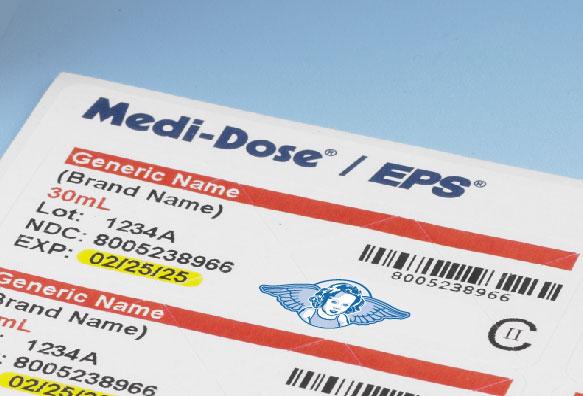
The important commitment that has been made by The Emily Jerry Foundation revolves around our GUARDIAN ANGEL Pediatric Safe Label Program , that was first introduced in 2013. Due to the fact that adverse drug events and medication errors are of particular concern with babies and children, coupled with the fact, that with pediatric medications, body weight is an extremely critical issue with respect to calculating the correct dosages, The Emily Jerry Foundation has committed to getting the Guardian Angel logo printed on ALL medication packaging intended for babies and children in our nation’s hospitals.
I am very pleased to announce that the Patient Safety Movement Foundation will be highlighting this very important commitment at their upcoming Summit, along with the commitments from Massachusetts General Hospital and Brigham & Women’s Hospital. Along these lines, the timing couldn’t be more perfect! Earlier this week, I received official confirmation from another one of The Emily Jerry Foundation’s key technology partners, Codonics, that they have allocated engineering resources to the integration of the GUARDIAN ANGEL logo into their SLS system (in the beginning of 2014), so that every medication label produced by their SLS system, for medications intended for babies and children, will now have our GUARDIAN ANGEL logo printed on it!
The Patient Safety Science & Technology Summit in Laguna Niguel California, January 11th Through the 13th

Earlier this year I began collaborating with an amazing organization called the Patient Safety Movement Foundation with a wonderful cause. Their core focus and mission is very much the same as The Emily Jerry Foundation’s in so many ways. At their upcoming Patient Safety, Science & Technology Summit in January 2014, they are successfully garnering support from some of the best and brightest minds in healthcare, science, industry, and government, to address the key patient safety issues that lead to so many senseless deaths every year. What makes this summit different from so many others, is the fact that they are requiring commitments across the United States to implement actionable patient safety solutions in our nation’s medical facilities that are proven to significantly reduce the number of tragic preventable medical errors, like the one that took my beautiful daughter Emily’s life in 2006. Most importantly, each attendee will leave this summit with actionable plans that they will commit to implementing at their individual institutions when they return.
As I mentioned in a recent article posted to The Emily Jerry Foundation’s website, recent estimates of deaths in the United States from preventable medical errors are now currently at over 440,000 lives per year, according to The Journal of Patient Safety (September 2013 – Volume 9 – Issue 3 – p 122–128) titled “A New, Evidence-based Estimate of Patient Harms Associated with Hospital Care”. Even though this number is staggering, making preventable medical errors the third leading cause of death in our nation, following heart disease and cancer, the primary objective of the Patient Safety Movement’s Founder, Joe Kiani, is to ultimately get to ZERO preventable deaths by 2020. As overwhelming a task as this may seem, by getting the leaders in our nation to truly rally behind this extremely vital cause and, more importantly, take action by making these firm commitments, like Joe, I believe this is a very realistic goal. With that in mind, this is precisely why I have offered the full support of The Emily Jerry Foundation and its programming, as well as, myself personally, to doing everything I possibly can through my advocacy efforts to help make this goal of ZERO deaths from preventable medical errors in 2020 a reality!
This is why I felt so honored when Joe personally invited me to be a panel speaker at their upcoming event. The Patient Safety Science & Technology Summit will be held January 11-13, 2014 at the Ritz Carlton in Laguna Niguel California.
Below you can watch a segment that Joe Kiani and I just participated in, last week, titled “How to Stop Hospitals From Killing Us” on Huffpost Live. This discussion allowed me to share Emily’s story, as well as, further emphasize how very committed advocates like, Joe and myself, truly are compelled to be an active part of the overall SOLUTION to the enormous number of catastrophic deaths from preventable medical errors that occur every year in the United States. In my opinion, absolutely none of these people, like my daughter, have to die so senselessly. After all, these horrible errors are, in fact, “preventable” if we all join together and find logical solutions that make sense. Subsequently, if we can get everyone to “rally” and take action, modifying their internal systems in medicine with clinically proven technology and new and evolving “best practices” that significantly lower the probability of “human error”, in our nation’s world-renowned medical facilities, literally, hundreds of thousands lives will be saved every year!
The Emily Jerry Foundation and Codonics Partner at Upcoming American Society of Health System Pharmacists Midyear Meeting in Orlando Florida
When my two-year-old daughter, Emily, passed away from a tragic medication error in 2006, my primary concern as her father was to make sure that her story and the significant “lessons learned” be brought forward and that the internal systems in medicine be subsequently modified so that others wouldn’t suffer a similar fate, over and over again. Shortly after her death, I decided to become a full-time patient safety advocate, focusing the core of my work on being an active part of the solution to preventable medical errors. When I first began to educate myself on preventable medical errors in our nation, I was astonished to find that many sources were estimating that over 200,000 people die every year in the United States from preventable medical errors. In a more recent article from the Journal of Patient Safety (September 2013 – Volume 9 – Issue 3 – p 122–128) titled “A New, Evidence-based Estimate of Patient Harms Associated with Hospital Care”, I was completely horrified to find that now, in 2013, the revised estimated number of deaths from preventable medical errors in the United States is actually over 400,000 a year! This makes preventable medical errors in our nation the third leading cause of death, only after heart disease and cancer.
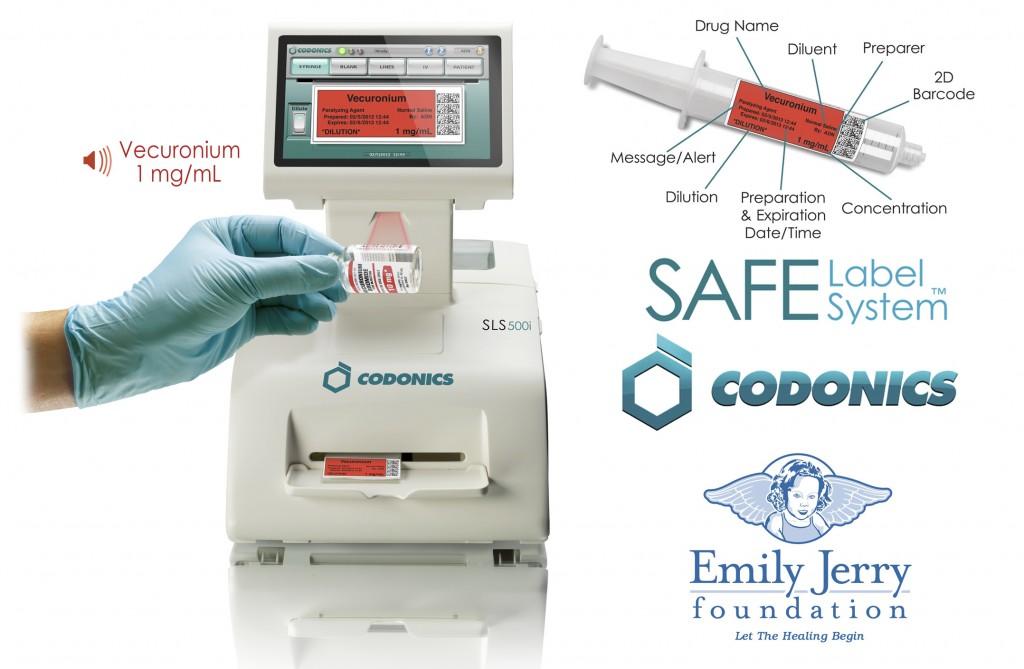
As Emily’s father, and more importantly, someone who has devoted the remainder of their life to being a patient safety and caregiver advocate focused on being a part of the solution, I’ve always taken issue with the simple word “preventable”. To me, the word “preventable” implies that we can, in fact, stop or impede something from happening only if we can acknowledge and anticipate that an event will occur and, consequently, implement the appropriate measures needed to “prevent” something from happening. However, with that notion in mind, in order to prevent something from happening (i.e., preventable medication errors, etc.), you absolutely must be PROACTIVE in terms of your approach to exactly what you’re trying to prevent. This is where The Emily Jerry Foundation’s key technology partner in patient safety, Codonics, and their Safe Label System (SLS) come into play at the upcoming American Society of Health System Pharmacists Midyear Meeting, in Orlando Florida, next week.
 Beginning on Monday, December 8th, through Wednesday the 11th, I will be giving five minute presentations in the Codonics booth #1551 each day at 11:45, 12:30 and 1:30. There really is no better time for our nation’s great hospitals to step up and increase patient safety through technologies that can help prevent medication errors. Let’s not wait for another tragic event like Emily’s to occur. If you are attending the ASHP Midyear Meeting, I encourage you to join me to learn about technology available to help you prevent medication errors. Together, we can ensure that systems are put into place and eliminate medication errors…forever.

 I’m absolutely certain that many people will ask the question, “How would Codonics Safe Label System (SLS) have saved your daughter, Emily?”. My answer is this: If the facility had been proactive about modifying their systems through the implementation of clinically proven technology, similar to Codonics (i.e., bar code scanning of vials with subsequent printing of labels with accurate information of concentrations, etc.) to reduce the probability of “human error” entering into the equation during the course of treatment, I am convinced Emily would still be with us today. Bottom line, prior to my daughter’s tragic death, due primarily to the initial cost associated with the implementation of proven technology available at that time it’s my opinion that the facility was in denial that a tragic medication error like Emily’s could even actually occur at their facility. After all, they were, and still are, a leading pediatric facility in the United States. Many of the top facilities in our nation still have this underlying attitude that a horrible medication error like Emily’s could “never” happen at their facility. Bottom line, these types of errors WILL in fact occur, and statistically they will happen, it’s just a matter of when! With that being said, our nation’s world-renowned medical facilities can choose to either modify their internal systems in a proactive way, before a tragic medication error occurs, or wait to react after there has been a loss of life and a tragic event actually happens. Along those lines, I also believe that as we move forward with healthcare reform and facilities all have to do so much more with less and less financial resources, I still think that our medical facilities in the United States will make the right choices with those limited funds. After learning Emily’s story, I believe they will choose to be proactive, making the necessary expenditures in terms of modifying their internal systems with the “smart implementation” of technology like Codonics SLS in their medical facilities. I look forward to seeing you in Orlando.
The Need for Standards in Healthcare: For Improved Patient Safety and Quality of Care
by Christopher Jerry and Michael Wong
In his recent article, “A SEC for Health Care?”, Dr. Peter Pronovost, PhD, FCCM (Professor, Departments of Anesthesiology/Critical Care Medicine and Surgery, The Johns Hopkins University School of Medicine and Medical Director, Johns Hopkins Medicine Armstrong Institute for Patient Safety and Quality) discusses the tremendous variability in the quality and measures of healthcare provided across this country:
Depending where you look, you often get a different story about the quality of care at a given institution. For example, none of the 17 hospitals listed in U.S. News and World Report’s “Best Hospitals Honor Roll” were identified by the Joint Commission as top performers in its 2010 list of institutions that received a composite score of at least 95 percent on key process measures.
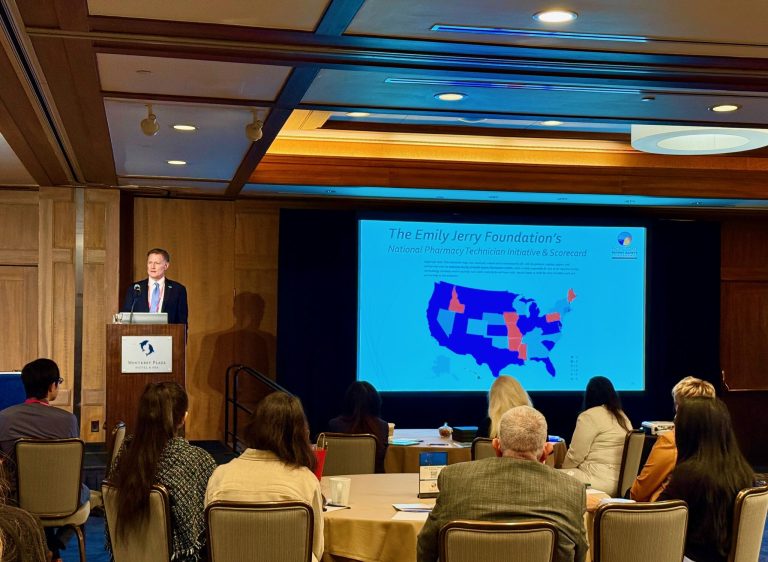
As an illustration of the variability of quality, the Emily Jerry Foundation recently released its “2013 National Pharmacy Technician Regulation Scorecard”. The development of this scorecard was prompted by the heartbreaking story of what happened to two year old Emily Jerry.

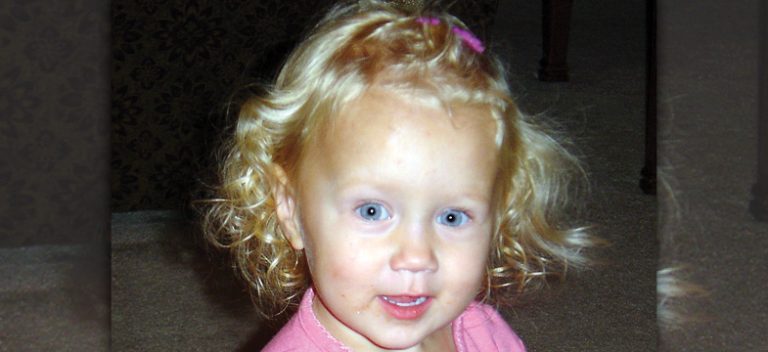
Emily had waged a successful battle against cancer. Her treatment had been so successful that her last MRI clearly showed that the tumor miraculously disappeared. In fact, three radiologists had to review her MRI films due to the fact that there wasn’t even any residual scar tissue left. Emily’s doctors said it was as if she never had cancer! Regardless she was scheduled to begin her last chemotherapy session on her second birthday, February 24, 2006. This last treatment was just to be sure that there were no traces of cancer left inside of her little body. Tragically, it was not cancer or the reoccurrence of cancer that ended Emily’s life. She was killed by an overdose of sodium chloride in the last chemotherapy IV bag she received.
Shortly after Emily’s tragic death, it was determined that a pharmacy technician, who did not have the proper training or core competency to be compounding IV chemotherapy, had made the deadly compounding error. The primary reason the pharmacy technician involved in Emily’s death lacked the core competency to be compounding IV medications safely, was due to the simple fact that in 2006, in the state of Ohio, there were absolutely no requirements to become a pharmacy technician, aside from having your high school diploma. No training requirements, no continuing education requirements, no oversight by the Ohio State Pharmacy Board, no licensing or registration requirements, etc.
What is even more disturbing, is the fact that The Emily Jerry Foundation has been receiving an outpouring of concern from most people in the general public, as well as, the caregivers themselves, who were previously completely unaware that in all of our nation’s world renowned medical facilities, including the leading pediatric facility where Emily was treated, pharmacy technicians are the individuals responsible for compounding virtually all IV medications in the clinical pharmacy. It was this type of variability in quality, in terms of pharmacy technician requirements, coupled with the fact that the pharmacy technician’s overall scope of responsibilities have expanded greatly in recent decades, that led to the passage of Emily’s Law in the state of Ohio in January of 2009. Even though Emily’s Law significantly helped to reduce much of this variability in quality in the state of Ohio, this inherent problem is still very evident in many other states across the nation.
The Emily Jerry Foundation’s 2013 National Pharmacy Technician Regulation Scorecard highlights the states that are doing a great job of protecting their patients through strict controls and educational requirements for pharmacy techs, as well as encourage those that are lagging behind to make improvements in their own standards in order to improve care and potentially save lives. States like North Dakota received a perfect score based on the Foundation’s grading criteria. However, it’s now 2013 and six states still have no oversight by their respective state boards of pharmacy and, subsequently, no regulation regarding their pharmacy technicians. Numerous studies have shown that overall pharmacy error rates are volume dependent. (reference: USA Today, “Speed, high volumes can trigger mistakes”). With that fact in mind, pharmacy technician oversight and regulation issues like these, become even more of a serious matter of public safety in states like New York, which currently has the second highest prescription volume in the United States (253,796,344 Rx filled in 2012). (reference: SDI Health, L.L.C.: Special Data Request, 2012)
How should this variability in quality be fixed and subsequently managed?
Dr. Pronovost, together with his colleagues, in their paper, “Achieving the Potential of Health Care Performance Measures” propose seven recommendations:
1. Decisively move from measuring processes to outcomes;
2. Use quality measures strategically, adopting other quality improvement approaches where measures fall short;
3. Measure quality at the level of the organization, rather than the clinician;
4. Measure patient experience with care and patient-reported outcomes as ends in themselves;
5. Use measurement to promote the concept of the rapid-learning health care system;
6. Invest in the “basic science” of measurement development and applications, including an emphasis on anticipating and preventing unintended adverse consequences; and
7. Task a single entity with defining standards for measuring and reporting quality and cost data, similar to the role the Securities and Exchange Commission (SEC) serves for the reporting of corporate financial data, to improve the validity, comparability, and transparency of publicly-reported health care quality data. Many in the healthcare industry use this likes of this service to help them in their data management and transparency reports.
Dr. Pronovost says the last proposal would bring about the most change:
Of the proposals, perhaps the biggest game-changer would be the creation of an entity to serve as the health care equivalent of the U.S. Securities and Exchange Commission. Rather than wading through a bevy of competing and often contradictory measures, patients and others would have one source of quality data that has national consensus behind it.
While the merits and demerits of a SEC for healthcare can be debated, one thing is clear from the comments posted in reply to Dr. Pronovost’s article – experts in specific areas should build consensus and determine what the ideal system should look like.
An example of the development of consensus is in checklists. The checklist developed by the Physician-Patient Alliance for Health & Safety reminds caregivers of the essential steps needed to be taken to initiate Patient-Controlled Analgesia (PCA) with a patient and to continue to assess that patient’s use of PCA.

Monitoring patients receiving opioids by patient-controlled analgesia (PCA) is a critical patient safety issue. In its Sentinel Event Alert, “Safe Use of Opioids in Hospitals”, The Joint Commission recently stated:
While opioid use is generally safe for most patients, opioid analgesics may be associated with adverse effects, the most serious effect being respiratory depression, which is generally preceded by sedation.
More than 56,000 adverse events and 700 patient deaths were linked to PCA pumps in reports to the Food and Drug Administration (FDA) between 2005 and 2009. One out of 378 post-surgical patients are harmed or die from errors related to the patient-controlled pumps that help relieve pain after surgical procedures, such as knee or abdominal surgery. This is a startling amount. People who are wrongfully treated whilst feeling they are in the hands of a person in a trustful position, can get in touch with lawyers from firms like the Atlanta Law Firm to see if they can claim for medical malpractice.
More recently, Pennsylvania Patient Safety Authority released its analysis of medication errors and adverse drug reactions involving intravenous fentaNYL that were reported to them. Researchers found 2,319 events between June 2004 to March 2012 – that’s almost 25 events per month or about one every day. Although one error a day may seem high, their analysis is confined to reports made to the Pennsylvania Patient Safety Authority and only include fentaNYL, a potent, synthetic narcotic analgesic with a rapid onset and short duration of action. This drug is now being used by many drug addicts as an alternative to heroin, although fentanyl can be anywhere from 25 to 50 times stronger than heroin. This is causing many heroin addicts to overdose and die due to using the same doses as they once did while injecting heroin. How can a drug that once used for its medicinal and pain-relieving properties now require a fentanyl drug test to be readily available in efforts to try and decrease opioid use?
Consequently, to provide greater patient safety, one of the recommended steps of the PCA Safety Checklist therefore provides:
Patient is electronically monitored with both:
pulse oximetry, and
capnography
The relentless push for quality and better patient safety must continue. To do otherwise will mean more Emily Jerrys and Amanda Abbiehls (who died after unmonitored use of a PCA).
For those of us who might think that death in a healthcare facility cannot happen to us or someone we know, Dr. Pronovost reminds us that preventable deaths is a leading cause of death. As he recently stated on The Katie Couric Show:
Frame the size of your problem. I suspect that all of your viewers either have been touched by or a family member has been harmed by mistakes. It is the third leading cause of death in this country. More people die from medical mistakes each year than died per year in the civil war.
So, make sure adequate training is provided for all those involved in healthcare delivery, like pharmacy technicians, and use checklists as a reminder of essential steps, such as the PCA Safety Checklist. It just may save a life.
Kroger Pharmacy Hits It Out of the Park Once Again!
Speaking at Kroger’s National Pharmacy Directors Meeting Provides Opportunity to Learn How Retail Pharmacy Should be Practiced by ALL Retail Establishments in our Nation

For those of you who have been following The Emily Jerry Foundation over the past few years, you are already aware of the fact that most my speaking engagements, time and attention, has really been focused on the various aspects of clinical pharmacy in our nation’s medical facilities. What has always been most important to me, with respect to pharmacy in general, is finding logical and effective ways to significantly reduce the probability of “human error” entering into the pharmacy workflow. Please remember that The Emily Jerry Foundation is a small “grassroots” effort working extremely hard to affect this type of positive change in pharmacy overall. This coupled with the fact that most of my time has been spent working on hospital pharmacy, quite honestly, up until this year, I really haven’t had the time to begin as concentrated an effort with the various unique concerns associated with the retail pharmacy practice.
When I first began working with Kroger Pharmacy, based in Cincinnati, Ohio, I must admit that I had a very dismal view of the retail pharmacy practice in general. Recently, however, I’ve been afforded the opportunity to meet and interact with so many wonderful people associated with Kroger Pharmacy, learning so much about how they manage and operate their retail pharmacies across the country. I am very pleased to say that they always seem to put their customer’s safety first, before their profits. In my opinion, this is exactly what really sets them apart from the other retail pharmacy chains. For this main reason and many others Kroger Pharmacy has completely changed my former negative opinions about retail pharmacy.
Many major corporations give lip service to certain safety issues, and even attempt to generate publicity surrounding that same “talk,” but the Emily Jerry Foundation judges integrity based on actions. When the bottom line is adversely affected by a new procedure that may increase patient safety, those good intentions sometimes never see the light of day. We all know actions speak louder than words. The reasons why we have been singling out Kroger Pharmacy as such a shining star in this arena is due to their accuracy policies and procedures which showcase a commitment to safety. For example, Kroger Pharmacy has implemented a policy where ALL new prescriptions are checked a second time within 24 hours of being filled. This is referred to as a “Post Fill Audit” and is not something that is required by law. This is above and beyond the call of duty, and shows a dedication to preventing serious harm. The double-checks are done within that critical first 24 hours to ensure if a mistake is caught that any adverse effects will be minimized and immediately stopped. Another simple technique currently in use is a barcode scan that occurs at pharmacy counters, where technicians must verify the date of birth of the customer. This ensures the right person is getting the correct medication. These actions speak volumes and prove Kroger is actually holding true to their core values of “Integrity, Honesty, Respect & Safety.” I applaud their efforts and hope to continue to work together with them and others in the retail pharmacy field to reduce errors and keep us all safe and healthy!

Former President Clinton: Encrusted Health System is Killing Patients
 Please read this great article about a talk given by Former President Bill Clinton at the Masimo Patient Safety Science and Technology Summit, this past January in Orange County, California. The underlying message and core philosophy in President Clinton’s speech mirrors mine exactly! Simply put, through the “smart” implementation of technology in medicine we really can ELIMINATE the 200,000 tragic deaths, like my beautiful daughter Emily’s, that occur every year as a result of preventable medical errors.
The main goal of the conference that former President Clinton took part in was to get manufacturers and developers of health monitoring devices to share information with one another in an effort to reduce unnecessary patient deaths in the United States. One of my favorite lines from his speech was as follows, “There need be no evildoers in this story. There’s just human nature and the nature of human development. Institutions have become ossified and rigid… where position is more important than purpose, or people get overwhelmed by complexity.” Because of this conference 8 major medical device manufacturers agreed to share data. This is a breakthrough we can all be excited about!
Read the whole story on the San Clemente Patch website by clicking here.
David Lynch's Great Article about Forgiveness in News-Herald References EJF
 I came across a great article recently in the News-Herald, a small newspaper that serves Northeast Ohio. David Lynch, former mayor of Euclid, Ohio, wrote a touching piece on forgiveness and referenced my reunion and public forgiveness of Eric Cropp (the pharmacist responsible for Emily’s fatal dose), which can be viewed in the sidebar of our site. He holds me up as an example others can strive for when thinking of forgiveness in their own lives. I am humbled and honored to have touched him and inspired the article. Please read it when you get a chance by clicking on the scanned image below.

New Mexico Eliminates Pharmacy Technician Ratio Mandate Putting Thousands of Residents at Risk of Deadly Medication Errors
MEDIA RELEASE
FOR IMMEDIATE RELEASE
June 17th 2013
Media Contacts:
The Emily Jerry Foundation
Christopher S. Jerry
440-289-8662
chris@emilyjerryfoundation.org
www.emilyjerryfoundation.org
Traveling to New Mexico to Find out Why New Mexico State Pharmacy Board Member Was a “Driving Force” in Getting Pharmacy Technician Ratio Eliminated, Putting Tens of Thousands of Residents at Risk for Medication Errors!
CLEVELAND, OHIO- Last week, it was brought to my attention by a number of concerned pharmacists from the state of New Mexico that their state was now one of the few states in our nation to recently eliminate their pharmacy technician ratio mandate. If I understand correctly, under the new terms, the pharmacy technician ratio will now be determined by the pharmacist-in-charge (PIC). With this particular scenario, my primary concern from a patient safety standpoint is shared with many pharmacists themselves around the nation. It is NOT that the pharmacists themselves are not capable of making this very important determination. It’s quite the contrary, pharmacists are very qualified to determine safe ratios in their pharmacies. The primary concern, lies in the fact that in retail pharmacy especially, the large retail pharmacy chains treat their pharmacy workflow in their retail pharmacies too much as a volume based production line. If you live in New Mexico then you may want to take out health insurance with someone like New Mexico Insurance Services to protect yourself from these changes because with that type of mentality, through the corporate policies and procedures they implement, they put their core emphasis on quantity over quality, often at the expense of their customer’s safety. With that being said, my trepidation is due to the fact that pharmacy technician ratios are so closely tied to retail pharmacy’s PROFITS that the large retail pharmacy chains like Walgreens, CVS, Rite-Aid, etc., will now start to dictate and put pressure on their pharmacists in New Mexico to staff their pharmacies with as many pharmacy technicians as they so choose, throwing customer safety by the wayside, in an effort to maximize their profits. With that in mind, if a pharmacist employed by one of these large retail chains refuses to sign off on, or approve, a ratio in their pharmacy that they feel is clearly unsafe, the retail pharmacy will simply tell them to resign and find another job elsewhere.
As I have mentioned many times previously, the primary mission of any state board of pharmacy, is to protect the resident’s of their state from unsafe pharmacy practices. It is not clear to me how the New Mexico State Board of Pharmacy’s recent approval of the elimination of their pharmacy technician ratio will improve the safety, or benefit the residents of their state in any way, whatsoever. Again, the only people that stand to benefit from the elimination of the pharmacy technician ratio are the large retail pharmacy chains, as well as, the owners of the small independent retail pharmacies in New Mexico. They stand to benefit greatly by substantially increasing their PROFITS by now being able to legally staff their retail pharmacies with as many low cost, hourly, pharmacy technicians as they want, while simultaneously, lowering the number of registered pharmacists supervising and double checking these technicians work. Furthermore, by increasing the number of pharmacy technicians in any given pharmacy, you increase the overall number and volume of prescriptions that must be checked by the supervising pharmacist, thus, increasing the probability for “human error” and subsequent medication errors with catastrophic results. The following are just a few very relevant and well publicized pharmacy technician errors that really hit home with me, as I was lobbying in opposition of Senate Bill 818 in Florida earlier this year.
http://usatoday30.usatoday.com/money/industries/health/2008-02-12-pharmacy-errors_N.htm
As everyone is probably already aware, The Emily Jerry Foundation has been working very closely with several experts in safe pharmacy practice, the American Society for Health System Pharmacists (ASHP), the Institute of Safe Medication Practices (ISMP), and numerous state boards of pharmacy all over the United States, to keep the large retail pharmacy giants from lobbying to increase pharmacy technician ratios. Having worked so closely with these pharmacy professionals over the past few years, I have learned that the only reason the retail pharmacy chains lobby so hard to increase the ratios, or eliminate them entirely, is because it is in the best interest of improving their profits. When profit maximization strategies by retail pharmacy come at the expense of overall customer safety, I find it quite appalling!
What I found even more disturbing was learning that a New Mexico State Pharmacy Board member, Danny Cross, may have been a “driving force” behind the elimination of the pharmacy technician ratio in New Mexico. This is alarming, if true, given the potential conflict of interest, given that Mr. Cross is the owner of a retail pharmacy establishment called Southwest Pharmacy in Carlsbad, New Mexico.
I have made flight arrangements and will be departing for New Mexico on Wednesday, June 19th. During this trip, I have meetings scheduled with Larry Lorens, the Executive Director of the New Mexico State Pharmacy Board and will be attending their meeting on Thursday, June 20th, which I found it ironic that The Emily Jerry Foundation was already on their agenda (click here to see the agenda, particularly section 12c).
Also, during my trip, I hope to meet with the Governor, Susana Martinez, to discuss this very important issue and will also be trying to schedule a meeting with Danny Cross to discuss the underlying logic behind this ludicrous decision to eliminate the pharmacy technician ratio. I am extremely concerned about the safety of the residents of the state of New Mexico and will be doing everything I possibly can, with respect to my advocacy efforts and those of The Emily Jerry Foundation, to get their pharmacy technician ratios, not only reinstated, but lowered in their state.
Our Mission
The Emily Jerry Foundation is determined to help make our nation’s, world renowned, medical facilities safer for everyone, beginning with our babies and children. We are accomplishing this very important objective by focusing on increasing public awareness of key patient safety related issues and identifying technology and best practices that are proven to minimize the “human error” component of medicine. Through our ongoing efforts The Emily Jerry Foundation is working hard to save lives every day.

Last Updated: July 25, 2018 by ejfadmin
URGENT ALERT: IV Saline in Short Supply according to Major News Outlets
It is being reported nationwide that hospitals are experiencing a shortage of standard bags of saline for use with intravenous medications. In the eyes of the Emily Jerry Foundation this should put us all on High Alert status. The following articles are recent news reports that have covered this very important issue:
USA Today: Hospitals struggle with intravenous saline shortage
Reuters: U.S. hospitals hit with shortage of intravenous saline
MedPage:IV Saline in Short Supply
My comments regarding the situation are below…
This shortage of standard bags of saline puts many patients at serious risk of death from sodium chloride overdose. Due to the fact that clinical pharmacy works in the background at any medical facility, many physicians, nursing staff, and the general public are not aware that pharmacy technicians routinely compound virtually ALL IV medications in our nation’s medical facilities. Unfortunately, in many states there is little, to no regulation or oversight of pharmacy technician’s core competency (see the emilyjerryfoundation.org home page to look up the Pharmacy Technician Scorecard for your state).
My concern lies in the fact that if a facility runs out of standard bags of saline with .9% sodium chloride, then the pharmacy will be forced to compound this base solution with 23.4% hypertonic saline and add a diluent. If one mistake in calculation is made it could subsequently prove lethal to many pediatric patients. In 2006, as many of you are already aware, I lost my beautiful 2 year old little girl, Emily Jerry, to a very similar tragic medication error, when the clinical pharmacy, at a leading pediatric hospital here in Cleveland, ran out of standard bags of saline with .9% sodium chloride. In my daughter’s case, the pharmacy technician filled an empty compounding bag with 3 vials of 23.4% hypertonic saline.
The Emily Jerry Foundation is recommending that, if the facility where you, or your loved one, is being treated runs out of standard bags of saline, you should insist that only a pharmacist prepare ALL IV medications during the course of your stay. We have gone ahead and prepared the following form letter that you can use to help during this shortage, prior to being treated or admitted to a medical facility. If you decide to use this letter, please make sure to fill in the appropriate fields with the correct information and get it signed from a hospital administrator in charge. Please don’t be afraid to INSIST on it!
Click here to download the EJF Saline Shortage Request Letter to Clinical Pharmacy